
Dojo: The Coding Agent Built to Finish
Dojo understands the system before changing it, debugs with evidence, makes architecture visible, and stays with the work until the Definition of Done is satisfied.
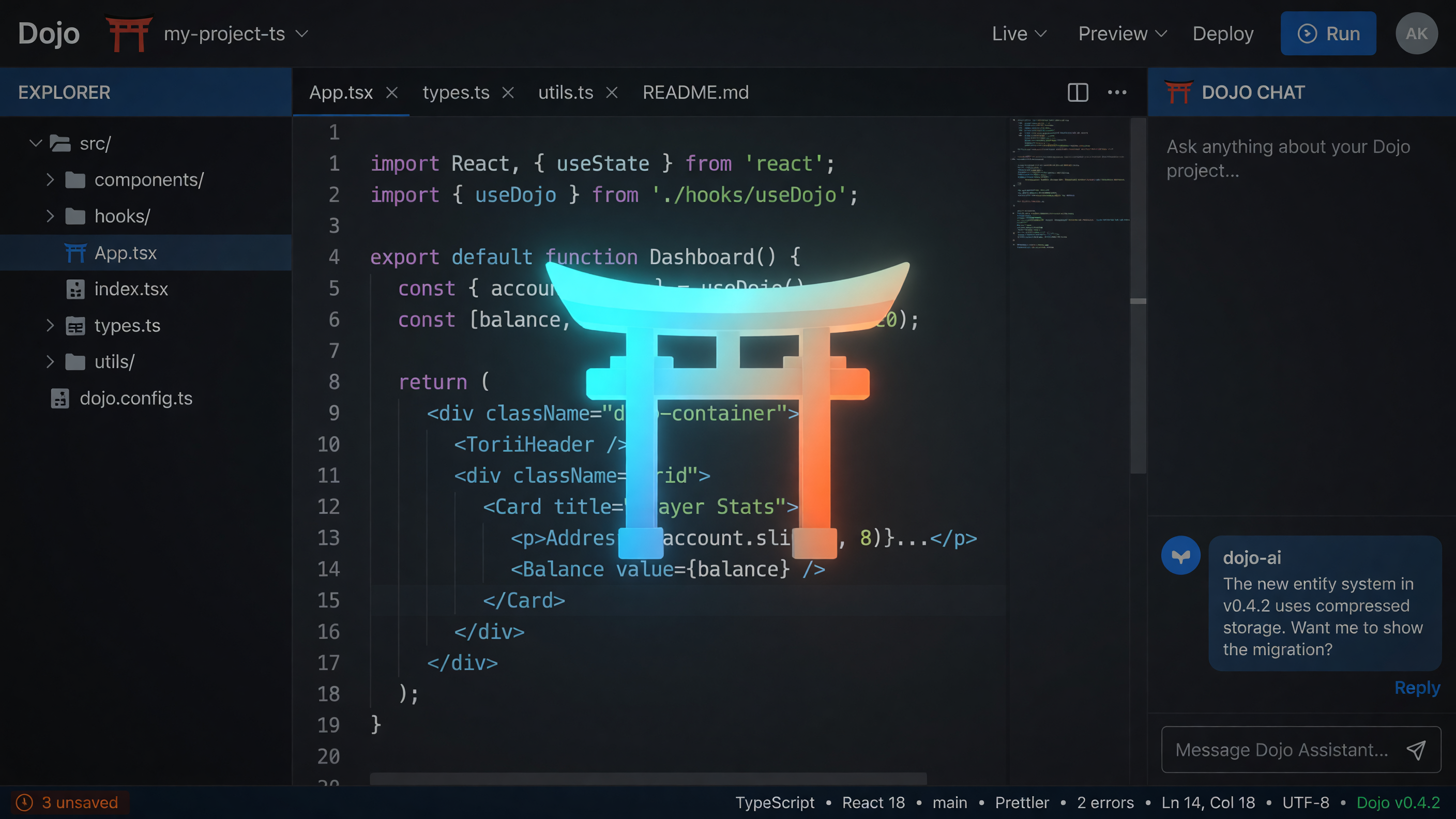
Coding with AI should feel less like supervising an autocomplete engine and more like working beside an experienced engineer.
That means understanding the system before changing it. Tracing a bug across boundaries instead of patching the first suspicious line. Explaining the design clearly. Making focused edits. Running the checks. Reviewing the actual diff. And staying with the work until the result meets a real Definition of Done.
That is the coding experience Dojo was built to deliver.
Dojo can read a codebase, search it broadly, edit it precisely, run its tools, inspect failures, use a browser when the bug lives in the interface, and verify the result. More importantly, it coordinates those abilities as one working process. The goal is not to produce the most text or summon the most agents. The goal is to reach a correct, reviewable result with less waste.
Understand the design before touching the code
A difficult bug rarely lives inside one isolated function.
The symptom may appear in the interface while the cause sits in state management. A request may fail at the API boundary because a type changed three layers earlier. A race condition may only become visible when two otherwise-correct operations overlap.
Dojo begins by building a working model of the system: where data enters, how it moves, what owns each decision, and where the observed behavior diverges from the intended behavior. It searches call sites, follows types, reads tests, checks configuration, and narrows the investigation before making changes.
That internal understanding matters because fast edits are not the same as fast engineering. The quickest patch can become tomorrow's second bug.
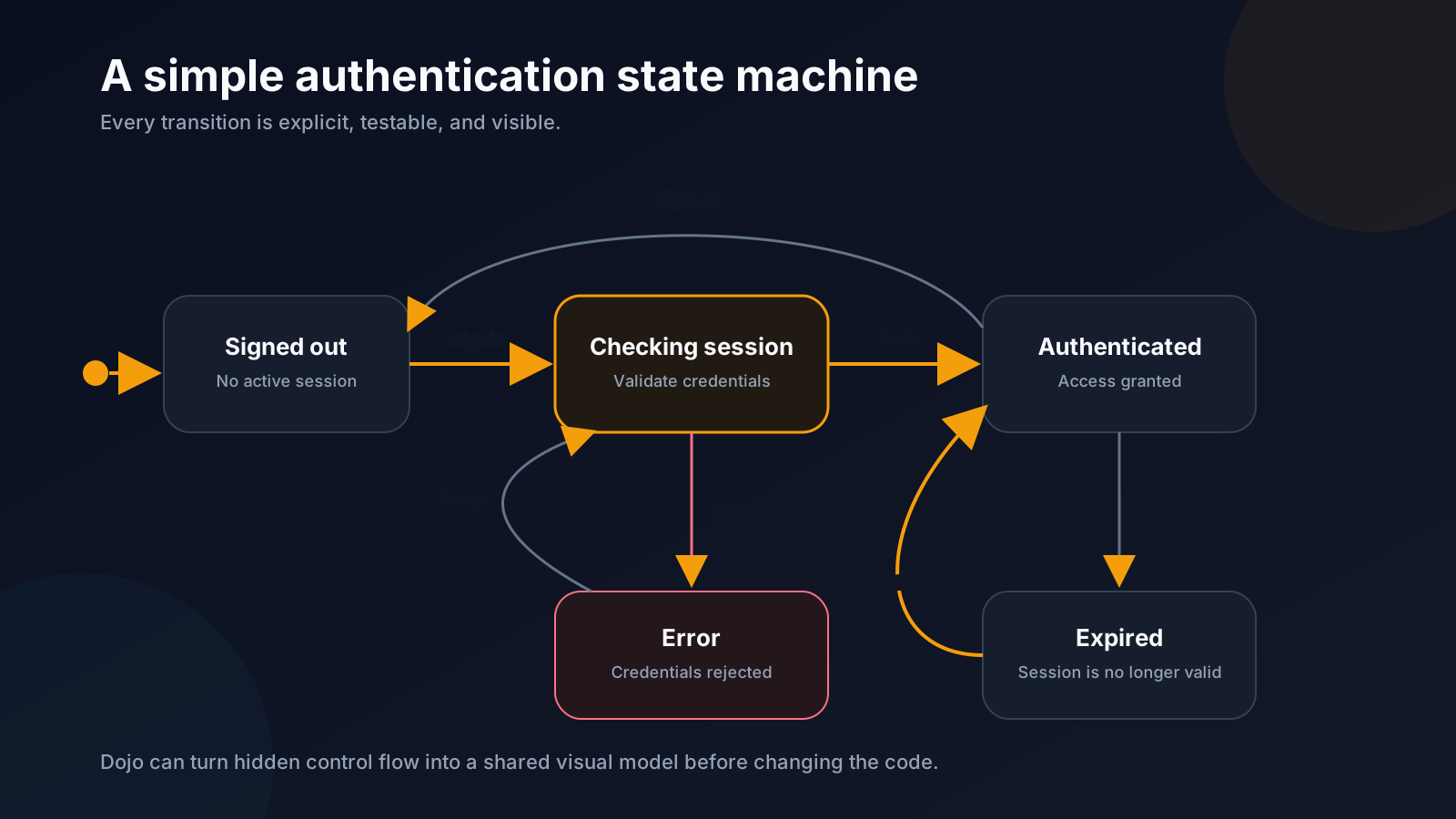
When the design is easier to see than to describe, Dojo can turn it into a flowchart, state machine, sequence diagram, dependency graph, or architecture map. These are not decorative pictures. They create a shared model between the developer and the agent.
A flowchart can expose a missing branch. A state machine can reveal an impossible transition. A sequence diagram can show who is waiting on whom. A dependency graph can make an unexpected coupling obvious.
Instead of asking you to absorb another wall of prose, Dojo can show the shape of the system and ask: is this the design you intended?
That shortens the distance between investigation and agreement.
Debugging is an evidence problem
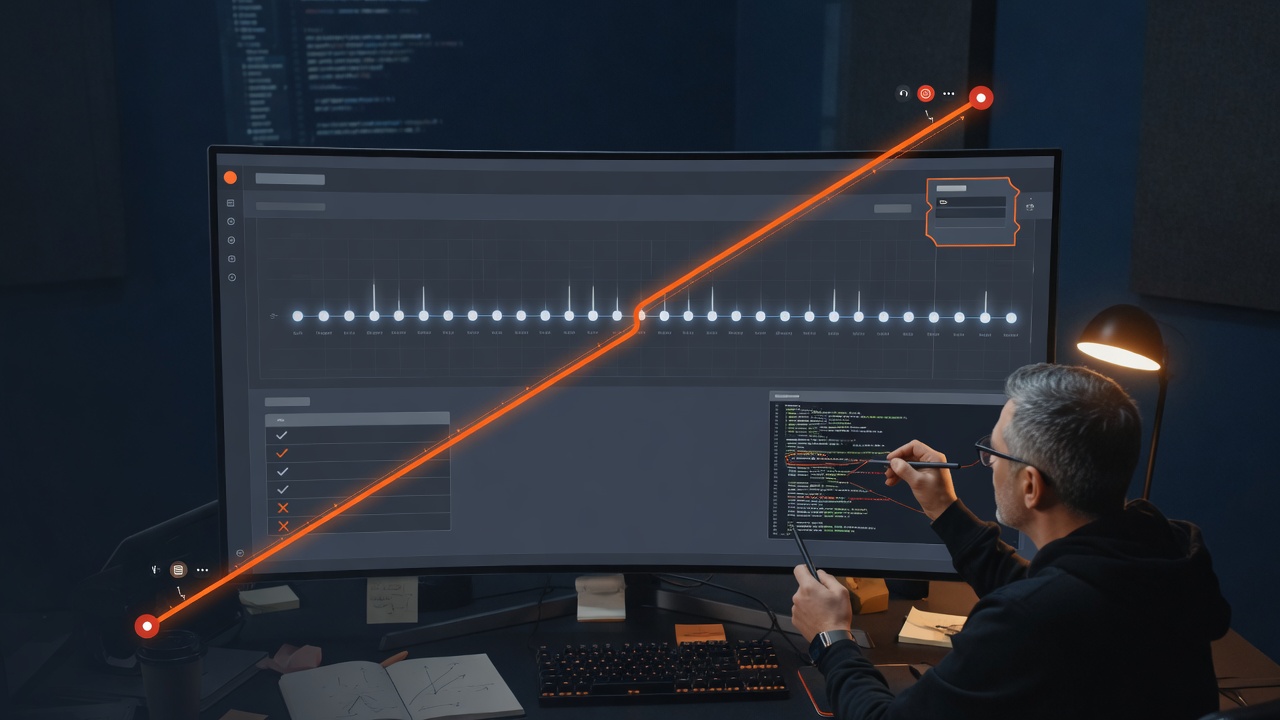
Dojo treats debugging as a sequence of testable claims.
First, reproduce the failure or identify the strongest observable evidence. Then trace the path that produces it. Form a hypothesis. Test the hypothesis with the smallest useful check. Make the narrowest coherent correction. Finally, run the validation that would disprove the fix if it were wrong.
The tools change with the bug. A compiler error needs a compile. A runtime regression needs logs or a reproducible path. A visual defect needs the actual rendered interface at the affected viewport. A network problem needs request and response evidence. A concurrency problem needs attention to ordering, shared state, and timing.
Dojo can move through those layers without turning the conversation into a paste bin. Reads, searches, test output, screenshots, and diffs are presented as the artifacts they are. The explanation stays focused on what changed in the diagnosis.
That distinction keeps the interface clean while preserving the evidence a developer needs.
One Maestro, purpose-sized specialists
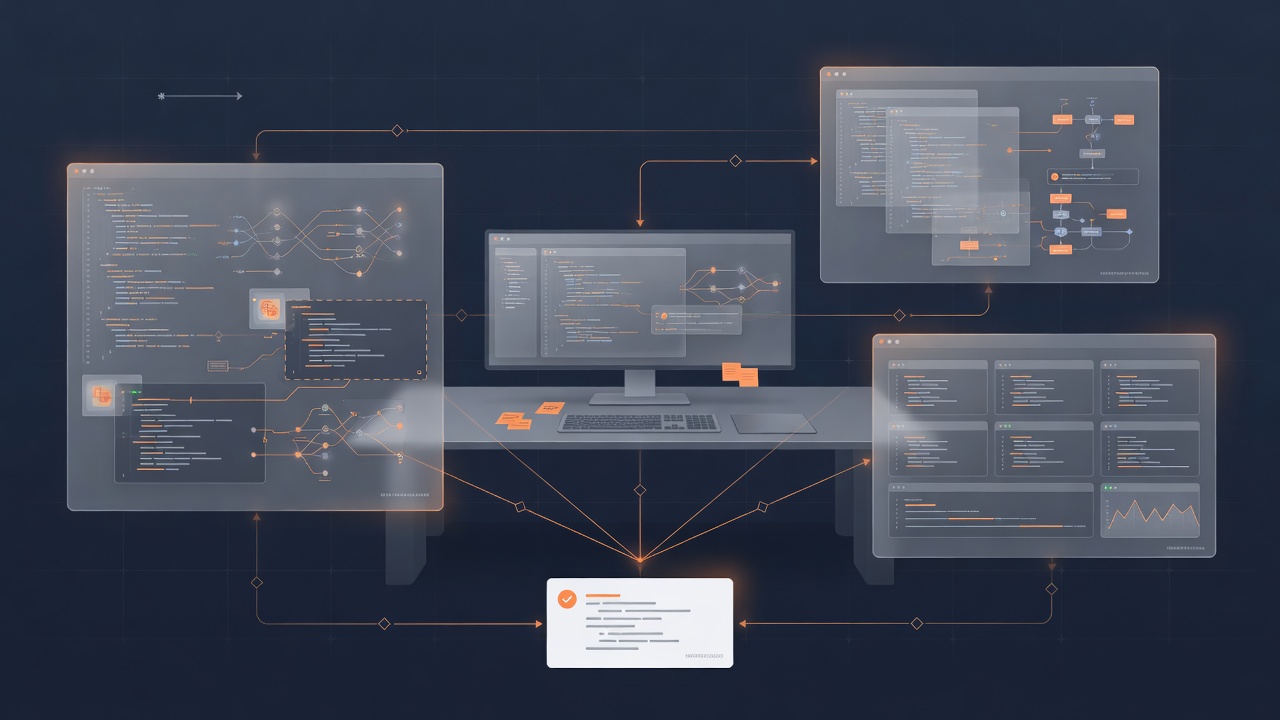
Dojo's primary coding partner is the Maestro: the agent that owns the conversation, the plan, the edits, and the final result.
When the work benefits from parallel investigation or an independent perspective, the Maestro can bring in purpose-sized specialists:
- Prime for deep, multi-angle reasoning or adversarial review.
- General for contained implementation and debugging work that requires judgment.
- Utility for fast, deterministic searches, checks, and mechanical work.
The names matter less than the discipline behind them. A small lookup should not consume the same reasoning budget as an architectural investigation. A task that needs judgment should not be handed to a lightweight worker merely because it is cheaper. Work should be routed to the smallest capable agent, with a clear scope and a clear finish line.
This is how Dojo is designed to do more with less: not by starving the work, but by spending attention where attention changes the outcome.
A second Maestro can also join through Lane Assist when a different perspective is genuinely useful. That is especially valuable for independent review, testing, or challenging an assumption. It is a supporting capability here; code review and Lane Assist deserve their own deeper treatment.
The interface is built for engineering, not transcript archaeology
A coding agent should not make developers excavate the answer from a scrolling monologue.
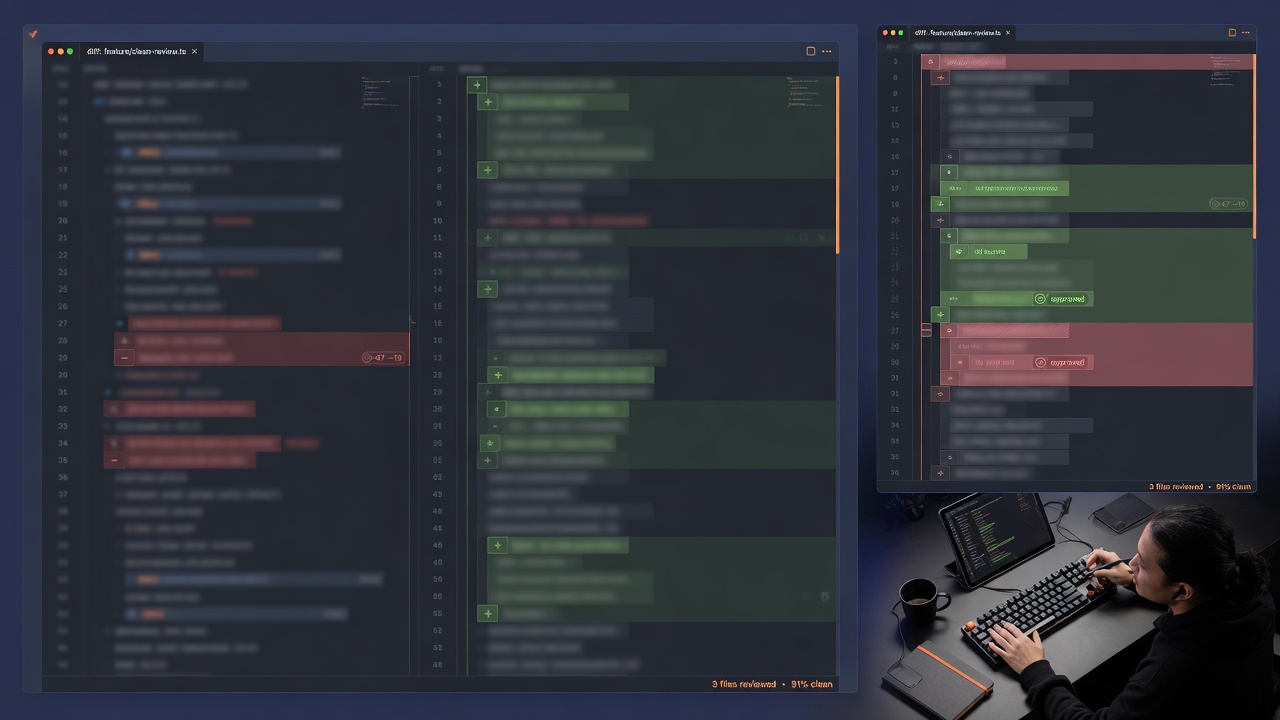
Dojo keeps source reads, syntax-highlighted code, tool activity, diagrams, and diffs in dedicated visual surfaces. Agent work can remain compact and expandable. The conversation explains the decision; the artifact carries the exact detail.
Diff review supports both common reading styles:
- Side by side when you want to compare old and new lines directly.
- Top to bottom when a unified narrative is easier to follow.
Added, removed, and unchanged lines retain their line numbers and structure. You can inspect what actually changed rather than trusting a summary that says everything is fine.
The same principle applies to design communication. A state machine belongs in a state-machine view. A graph belongs in a graph. Source belongs in a source viewer. The interface should match the shape of the information.
Talk through the bug without losing the code
Coding is visual work. Your eyes are already tracking source, output, diagrams, and the running product.
Dojo lets you talk through a problem while keeping your attention on those artifacts. Explain the symptom naturally. Add the detail you remembered halfway through. Interrupt when the investigation goes in the wrong direction. Ask for the short version, the deeper explanation, or a visual model.
Dojo can speak back in the same working rhythm.
Voice does not replace exact text. Code, commands, file names, and diffs still need precision. Voice removes the requirement that every thought begin as a perfectly formatted prompt, and it lets the explanation continue while your eyes remain on the work.
The result is a tighter debugging loop without turning the developer into a full-time transcript reader.

Done means the Definition of Done is satisfied
Some products describe repeated agent attempts as a "loop." Software teams already have a clearer industry term: the Definition of Done.
The job is not complete because the agent stopped or because one test passed. It is complete when the agreed evidence says the work is complete: the failure is resolved, required checks pass, the diff is coherent, and the requested behavior is present.
When Dojo believes that finish line has been reached, an independent auditor - potentially powered by a different model - can challenge the claim against the stated Definition of Done. The auditor's role is not to congratulate the main agent. It is to keep it honest.
That is only a touch of the idea. Definition of Done deserves a post of its own.
📊 Benchmarks: measured, not marketed
Performance claims should come with context. The runs below were recorded on April 24, 2026, as single-run, end-to-end harness comparisons on real coding work — not universal claims about every model, repository, or task.
Two comparisons follow: Dojo vs. Claude Code first, then Dojo vs. Codex CLI.
🥋 Dojo vs. Claude Code — headline run
Same workload, same day, both systems finishing with a perfect success rate. The difference shows up in latency and wire weight.
| Metric | Claude Code | Dojo | Winner |
|---|---|---|---|
| Total requests | 19 | 20 | — |
| Successful | 19 (100%) | 20 (100%) | 🤝 Tie |
| Errors (4xx/5xx) | 0 | 0 | 🤝 Tie |
| Wall clock | 351.3 s | 341.7 s | 🏆 Dojo (−9.6 s) |
| Avg latency | 9,573 ms | 5,420 ms | 🏆 Dojo (−43%) |
| Total payload | 7,012.7 KB | 3,695.5 KB | 🏆 Dojo (−47%) |
| Request payload | 6,832.3 KB | 3,625.1 KB | 🏆 Dojo (−47%) |
| Response payload | 180.5 KB | 70.4 KB | 🏆 Dojo (−61%) |
Zero errors on both sides. Dojo answered in roughly half the latency, on half the bytes.
🧮 Token economics: Dojo and Claude Code
Billable tokens are what actually reach the invoice, so effective input weighs cache reads at 10% and cache creation at 1.25×.
| Metric | Claude Code | Dojo | Winner |
|---|---|---|---|
| Non-cached input | 6,310 | 66 | 🏆 Dojo (−99%) |
| Cache read (10% billing) | 842,530 | 488,419 | 🏆 Claude Code (better cache hit volume) |
| Cache creation (1.25× billing) | 113,438 | 223,499 | 🏆 Claude Code (less new-cache premium) |
| Effective input | 962,278 | 711,984 | 🏆 Dojo (−26%) |
| Output | 10,710 | 6,084 | 🏆 Dojo (−43%) |
| Total (effective in + out) | 972,988 | 718,068 | 🏆 Dojo (−26%) |
Claude Code wins cache discipline outright. Dojo still lands 26% lighter on total billable tokens.
🎚️ Model mix: where the reasoning budget went
| Model | Claude Code | Dojo | Winner |
|---|---|---|---|
| Opus 4.6 calls | 17 | 15 | 🏆 Dojo (less premium) |
| Haiku 4.5 calls | 2 | 5 | 🏆 Dojo (more delegation) |
| Opus output tokens | 10,164 | 4,872 | 🏆 Dojo |
| Haiku output tokens | 546 | 1,212 | — (Dojo did more on Haiku) |
Dojo pushed more work down to the small model and kept premium output at less than half the size.
🏁 Scorecard: Dojo and Claude Code
| Category | Winner |
|---|---|
| Reliability | 🤝 Tie (both 100%, zero errors) |
| Speed | 🏆 Dojo (−43% avg latency, ~10 s faster wall clock) |
| Bandwidth | 🏆 Dojo (≈half the payload) |
| Token efficiency | 🏆 Dojo (−26% total billable) |
| Cache discipline | 🏆 Claude Code (more cache reads, less cache creation) |
| Cost-shaping | 🏆 Dojo (offloaded 5 calls to the small model vs. 2) |
| Overall | 🏆 Dojo |
🤖 Dojo vs. Codex CLI — fresh OpenAI run
A longer session on the OpenAI stack. Dojo finished more requests, finished all of them, and did it in roughly 60% of the wall clock.
| Metric | 🥋 Dojo (primary) | 🤖 Codex CLI (secondary) | Winner |
|---|---|---|---|
| ✅ Completed successfully | 37 | 32 | 🏆 Dojo |
| ⚠️ Incomplete requests | 0 | 1 | 🏆 Dojo |
| 🕐 Wall-clock span | 578.1 s | 962.2 s | 🏆 Dojo (−40%) |
| ⚡ Active request time | 245.5 s | 427.4 s | 🏆 Dojo (−43%) |
| 🚀 Average latency | 6,635 ms | 13,355 ms | 🏆 Dojo (−50%) |
| 📦 Total payload | 51,472.6 KB | 262,351.2 KB | 🏆 Dojo (−80%) |
| 🧠 Input tokens | 2,022,324 | 1,521,255 | 🏆 Codex CLI |
| ♻️ Cached input tokens | 1,425,408 | 1,320,448 | 🏆 Dojo |
| ✍️ Output tokens | 11,062 | 9,731 | 🏆 Codex CLI |
| 🤔 Reasoning tokens | 1,328 | 595 | 🏆 Codex CLI |
| 🛠️ Function calls | 48 | 38 | 🏆 Dojo |
| 📭 Function outputs | 0 | 0 | 🤝 Tie |
Overall winner: 🥋 Dojo — faster, complete, and far lighter on the wire in this run.
Codex CLI won the raw token columns, and those rows stay in the table. Credible engineering does not hide the column it lost. What Dojo bought with those tokens was a run that actually finished — 37 of 37, zero incomplete — at half the latency and a fifth of the payload.
📈 Dojo has evolved since April
These numbers are already behind the product. Since April 24, the orchestration layer has been tightened in the three places that move the needle:
- 🪙 Token usage. Sharper context hygiene, better cache shaping, and stricter delegation briefs mean far fewer tokens re-purchased for work the agent already understood.
- ⚡ Speed. More work routed to small models, more genuine parallelism, and lighter payloads on the wire.
- 🎯 Quality. Definition of Done turns completion into an evidence check instead of a stopping point — an independent auditor challenges the claim before the work is called finished. Lane Assist adds a second Maestro, ideally on a different model, to review, test, and disagree with evidence rather than rubber-stamp.
That last pair matters most. Token counts and latency describe how efficiently an agent worked; DoD and Lane Assist decide whether the work was actually right. A fresh benchmark run is expected to show Dojo materially stronger on all three axes — token usage, speed, and quality — but the honest position is that the number does not exist until it is measured, and it will be published when it is.
🔍 How to read these figures
What they mean
- Recorded outcomes for specific April 24, 2026 runs.
- End-to-end harness comparisons, not isolated model-speed tests.
- Evidence that orchestration changes speed, token use, and result quality.
What they do not mean
- A guarantee that every Dojo task is faster.
- Proof that one underlying model is universally better.
- A blinded, statistically significant benchmark suite.
- Permission to collapse every trade-off into one marketing percentage.
Built to carry the work across the line
The best coding agent is not the one that writes the most code in the first minute.
It is the one that understands enough of the system to change the right thing. It makes the design visible when words become inefficient. It chooses the right amount of reasoning for each part of the job. It lets you inspect the real diff. It keeps you involved through natural conversation. It tests its assumptions. And it does not confuse stopping with finishing.
That is the promise behind coding with Dojo:
Understand the system. Debug with evidence. Show the design. Make the change. Verify the result. Finish the job.