
One Builds. Another Challenges.
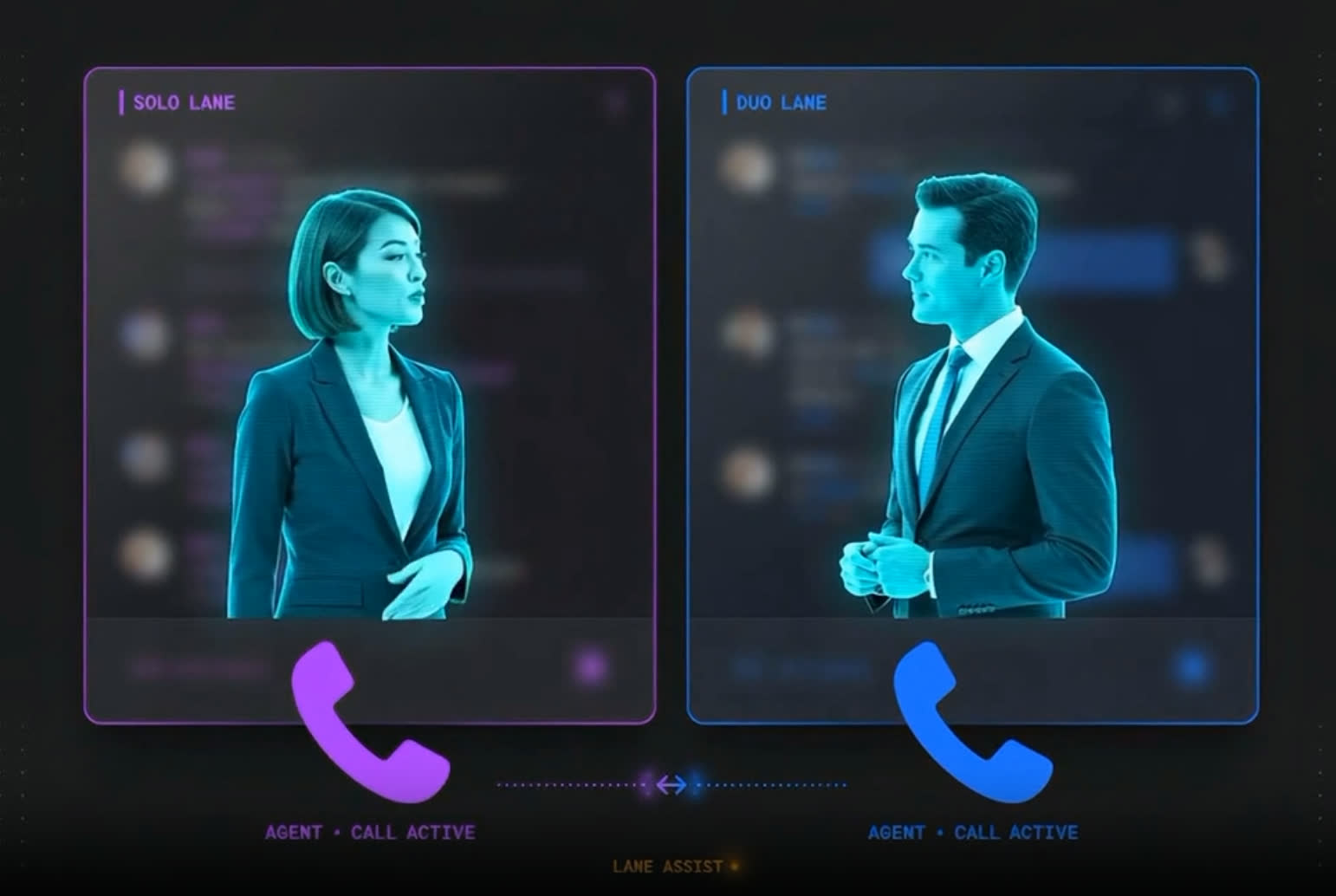
Code is still the center of the Dojo. What makes Dojo different is not only that it can write and debug — it is that a second lane can challenge the work through Lane Assist, ideally powered by a different model.
Code is still the center of the Dojo
There is a fashionable idea that the future of software is pure conversation — that code itself will fade into the background while agents speak, sketch, and ship on our behalf.
Dojo does not believe that.
Code is still the center of the Dojo.
Speak when speaking is faster. Listen when your eyes should stay on the work. Generate media when the story needs a picture. But when the product must run, pass tests, and survive real users, the truth lives in the diff.
That is why Dojo is built first as a coding agent — and why its strongest advantage is not only that it can write code, but that it can review it with an independent second mind.
Coding comes first — briefly, on purpose
Dojo can write features, wire modules, chase a failing test, and stay with the work until the result is verified. Debugging gets a seat at the table too: read the stack, inspect the tree, change the one thing that must change, and prove the fix.
Those skills matter. They are not the whole story.
Most coding agents stop at generation. They produce a confident patch, narrate why it is correct, and wait for applause. The missing half of senior engineering is not more generation. It is independent challenge.
A good teammate does not only build.
A good teammate asks what the builder may have missed.
The single-lane trap
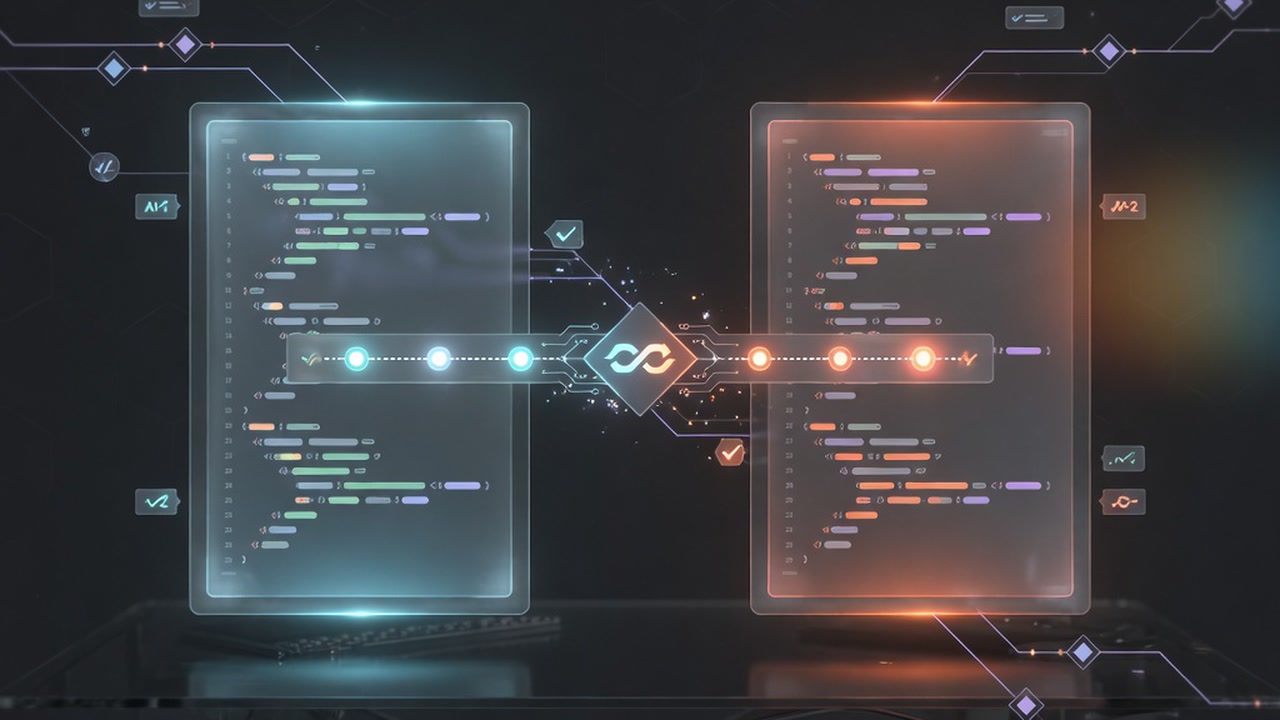
A single agent, no matter how strong, has one context window and one chain of reasoning. It can become attached to its own plan. It can overlook an edge case it already decided not to worry about. It can sound certain while being wrong in a quiet place.
That is not a moral failure. It is a structural one.
Human teams solved this long ago with code review. One person authors. Another person reads with fresh eyes. Disagreement is not drama — it is quality control.
Dojo brings that structure into the product itself.
Two lanes. One workspace.
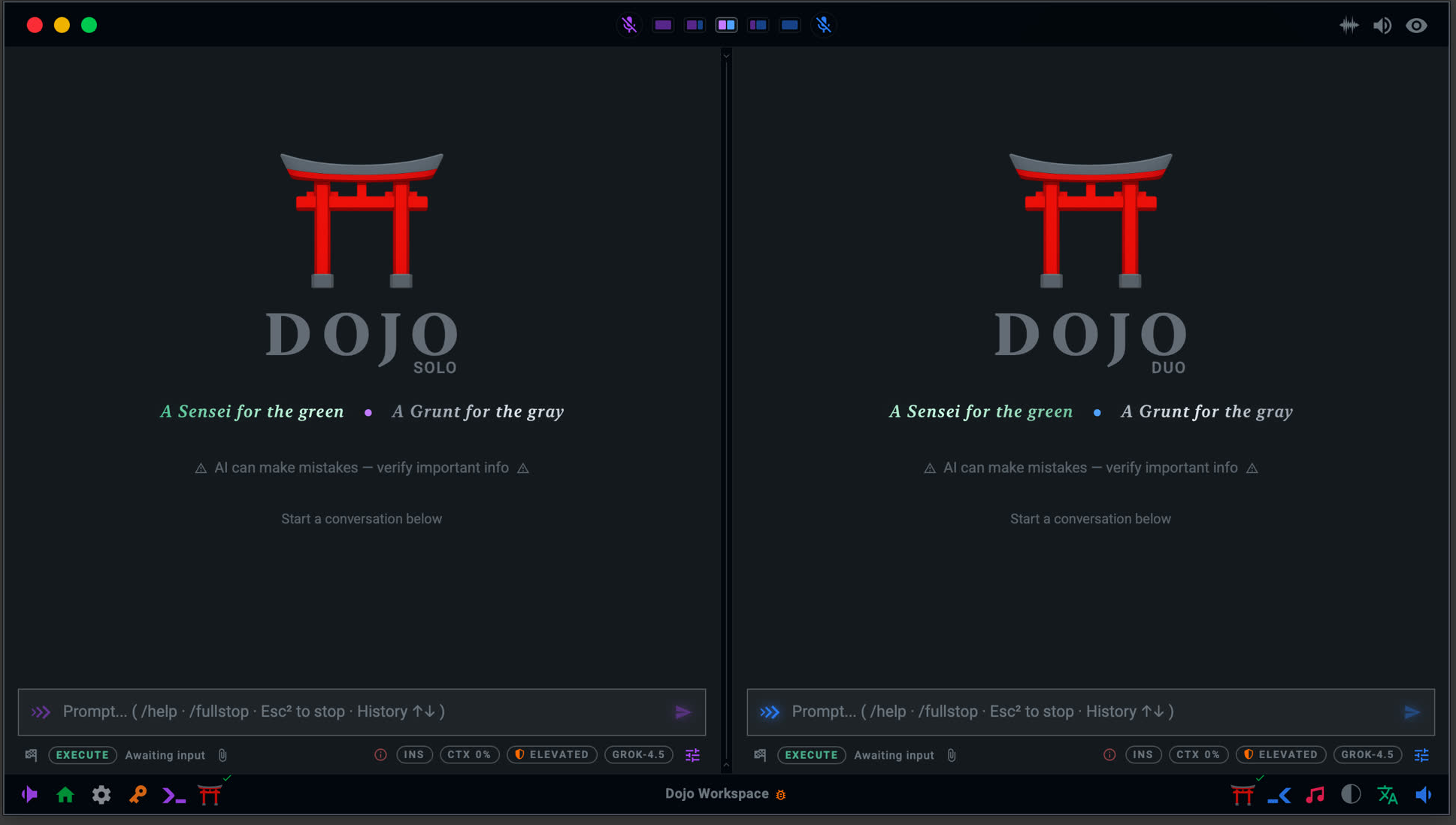
Dojo can run as Dojo Solo and Dojo Duo — two side-by-side lanes in the same workspace. One lane owns the build. The other can be invited in when the work needs pressure.
That invitation has a name: Lane Assist.
Lane Assist is not a second autocomplete box. It is a peer relationship. One lane hails the other, states the task, sets a turnaround window, and waits for a real answer. The peer can accept, decline, or send findings back. The conversation is deliberate. The ownership is clear.
Lane Assist is the bridge
The product story is simple enough to say out loud:
Dojo is made for coding. Because two lanes work together via Lane Assist. Dojo Solo. And Dojo Duo.
One lane builds. The other can be called in — ideally powered by a different model — to challenge assumptions and catch what one perspective may miss.
Ahoy is the protocol. Review is the point.
Under the surface, Lane Assist runs on a clear contract — the Ahoy protocol.
A lane does not vaguely hope the other side is listening. It sends a request with:
- the exact task
- the expected output shape
- a turnaround window
- enough context to review the same ground
The peer answers in kind: final findings, a partial pass, an acceptance while working, or a decline if busy. If the peer says “on it,” the requester actually waits. Immediate re-polling is not waiting. Silent fallback is not the contract.
That back-and-forth matters for code review.
The building lane is the Owner. It holds the artifact, integrates outcomes, and decides pure preference ties. The reviewing lane is the Challenger. Its job is not to ratify. Its job is to find what is wrong, incomplete, risky, or unproven.
A bare “looks good” with no probing is an incomplete review.
A different model is not a gimmick
Lane Assist is useful when both lanes share a model. It becomes especially powerful when they do not.
Cross-model disagreement is high-signal.
One model may favor a clever abstraction. Another may notice the operational cost. One may trust a happy-path test. Another may ask what happens when the network flakes, the schema drifts, or the user retries twice. Different training, different instincts, different blind spots.
That is the point of a second opinion: not theater, not majority vote, and not confidence as a substitute for evidence.
In serious review, evidence outranks authority. A failing test, a type error, a precise file:line finding, or a re-read of the live diff beats a polished assertion. When two lanes disagree, the work is to raise the evidence tier — not to crown the louder voice.
Watch the review happen
This is the coding and code-review story in motion: one lane builds, Lane Assist brings the other in, and the challenge lands where it belongs — on the actual work.
Why this makes Dojo a stronger coding agent
Plenty of tools can propose code. Fewer can stay with a repository, use real tools, and verify outcomes. Fewer still treat review as a first-class workflow instead of a polite afterthought.
Dojo’s advantage compounds in three places:
- It builds in the open. Coding and light debugging remain grounded in the project tree, the diff, and the measured result.
- It can summon a peer on purpose. Lane Assist is an explicit hail, not a hidden ensemble. You see who owns the work and who is challenging it.
- It can disagree productively. With Ahoy’s back-and-forth and, ideally, a second model, review becomes a disciplined exchange: request, wait, findings, evidence, integration.
That is closer to how strong engineering teams actually raise quality than a single stream of confident tokens will ever be.
What a good dual-lane review feels like
In practice, the pattern is simple:
- One lane finishes a change and knows the intended behavior.
- It hails the other lane with the branch, commit, or exact range under review.
- It asks for blocking issues, risks, and edge cases — not compliments.
- The peer reviews the actual diff, not a summary of the summary.
- Findings come back with evidence. Disputes get one focused verification pass when cheap.
- The owner integrates what is true, rejects what is noise, and keeps moving.
The human stays in command. The second lane is capacity and challenge, not a replacement for judgment.
And when the peer is busy or silent, the product stays honest about that too. Optional teammate capacity is still capacity — it is not a guarantee, and it should never pretend to be one.
One builds. Another challenges. Your code gets stronger.
Dojo will keep speaking, listening, teaching, and making media. Those doors matter. They make the work more human.
But the center remains code — and the craft of code includes review.
If you want an agent that only generates, many will do.
If you want an agent that can build, take a second look, invite another model across the aisle, and argue from evidence until the work is stronger than either lane alone…
Welcome to dual-lane review.
One builds. Another challenges. Your code gets stronger.